Your Cart is Empty




By Kailah, Founder of MG Naturals · Cosmetic formulator since 2014 · Last updated: May 2026
Most foundation shade-matching advice assumes a particular kind of skin: stable, predictable, with consistent tone from one day to the next.
Sensitive skin doesn't work like that.
If your skin flushes, gets red, reacts to weather, varies day to day, or has any kind of rosacea or eczema component, the standard "match your jawline" advice will get you the wrong foundation more often than the right one. You need a different set of rules.
Here's how to shade-match when your skin doesn't behave like a colour chart.
Three problems with conventional shade-matching when your skin is reactive:
1. Your baseline tone changes. Your jawline at 9am after a calm night's sleep is a different
colour than your jawline at 4pm after a stressful meeting and a hot coffee. Match in the wrong moment and you'll get the wrong shade for most of your week.
2. Redness adds undertone shift. Persistent redness or rosacea adds a pink-red layer to your apparent skin tone. If you match foundation directly to that red-flushed appearance, you'll end up with a foundation that's too pink — which makes redness look worse, not better.
3. The wrong ingredients trigger reactions. It doesn't matter how perfectly a foundation
matches your shade if it contains ingredients your skin reacts to. The foundation will look fine for an hour, then your face will flush and the colour mismatch will compound.

Choose a moment when your skin is at its most settled — usually:
• First thing in the morning, before stress or food
• After a few days of a calm routine (no new products, no sun exposure)
• In a cool environment (heat triggers flushing)
• In natural daylight
This is your true baseline. Match foundation to this state, not your reactive state. The foundation will then look right most of the time, and during flares it'll just blend with your natural redness rather than amplifying it.

If you have rosacea or persistent redness, you have to mentally subtract the red layer to find your actual base tone. Practical method:
• Look at your skin in areas that flush least (forehead, around the chin, behind the ears)
• Compare to areas that flush most (cheeks, nose)
• Your true base tone is closer to the lower-flush areas
This often means choosing a foundation that's slightly cooler or more neutral than the one your flushed skin seems to want. Because the goal isn't to match the redness — it's to gently neutralise it.

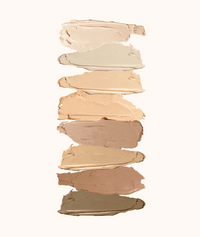
Colour theory tip: green neutralises red. Foundations with subtle green or olive undertones counteract redness more effectively than neutral or pink-toned foundations.
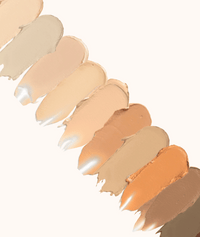
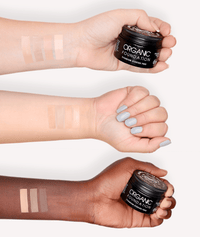
This is genuinely useful, and most brands don't make it accessible. Our "Olive Fair" shade in particular was developed because so many of our sensitive-skinned customers needed it. It looks counter intuitive in the bottle (the green tone is visible), but on red-prone skin it disappears completely while calming the redness underneath.

Once you have your matched shade, test it specifically during a flare day — when your skin is reactive, flushed, or stressed. This is when most foundation matches fail.
Apply your foundation during a flare. Wear it for 4–6 hours. Check throughout the day:
• Does it look more even, or does it amplify the redness?
• Does it sit smoothly, or does it look patchy on flushed areas?
• Does your skin feel calmer or more aggravated by hour 6?
If the answer to any of these is bad, you have either the wrong shade, the wrong undertone, or the wrong ingredients.
Foundation made for sensitive skin should:
• Contain zinc oxide (anti-inflammatory, calms redness)
• Use iron oxides for colour (well-tolerated mineral pigments)
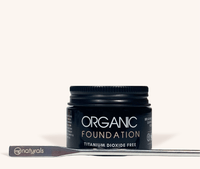
• Be Titanium Dioxide free (TiO2 generates free radicals on skin)
• Be fragrance-free (the #1 trigger for reactive skin)
• Skip bismuth oxychloride (causes 'cheek itch' in many sensitive types)
Our entire range is built around these standards specifically because so many of our customers came to us after "clean" brands kept making them react.
Take our product recommendation quiz because, we recommend not just a shade — but a formula that suits your specific skin. Combined with our Perfect Match Guarantee, this means even if your skin shifts unexpectedly between the time you order and the time it arrives, we'll swap it free.
Read more