Your Cart is Empty


QUICK ANSWER
Titanium dioxide (TiO₂) is a white mineral-derived pigment that gives cosmetics opacity, brightness and coverage. In foundations, powders, BB creams and sunscreens it is the ingredient doing most of the visible work — building coverage fast, whitening shades, faking a "smoothed" finish, and physically reflecting UV. Most consumers have never heard of it, even though it appears in more makeup than almost any other ingredient.

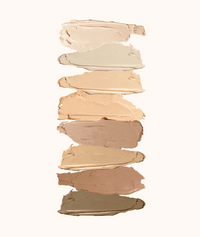
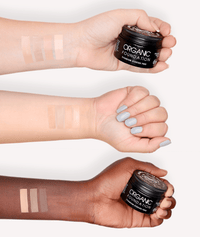
Titanium dioxide is the workhorse behind "perfect-skin" coverage. It is the reason your foundation looks lighter on your hand than the bottle suggests. It is the reason your powder looks blurring.

PEER-REVIEWED EVIDENCE
A 2023 peer-reviewed meta-analysis pooled 26 studies on titanium dioxide nanoparticles and found a statistically significant association between exposure and DNA damage, chromosomal damage, and gene mutation in cell-based studies. DNA damage is the precursor to nearly every long-term skin issue people fear — premature ageing, pigment disruption, sensitisation, and at the serious end, the cellular changes that drive skin cancer.
Citation:
Wang et al. (2023). Genotoxicity Evaluation of Titanium Dioxide Nanoparticles In Vivo and In Vitro: A Meta-Analysis.

Creating instant opacity. Whitening shades. Building coverage fast. Faking a smoothed finish. It is the shortcut that lets brands skip the harder work of balancing real pigments.
PEER-REVIEWED EVIDENCE
When titanium dioxide meets UV light, it generates reactive oxygen species — the same property the industry uses to clean water and break down pollutants. Applied to your face, the molecule behaves the same way. Reactive oxygen species are what dermatologists call free radicals: they damage cell membranes, disrupt cell function, and degrade collagen and elastin. Over time, this is what people experience as photo-ageing.
Source:
Skocaj et al. (2011). Titanium dioxide in our everyday life; is it safe? Radiology and Oncology, 45(4), 227–247.
Because it's been there forever. Because it's "approved." Because customers have been trained to scan for parabens and fragrance and to skip past the chalky-sounding stuff. And because explaining what titanium dioxide really does would force brands to defend why it's in their formula.
It is easier to leave it unexplained.