FREE SHIPPINGAustralia $70+ International $180+

0

Your Cart is Empty

Who should pay attention to titanium dioxide exposure?

By Kailah Shannon — Founder of MG Naturals. Cosmetic Formulator since 2014.

Last updated: 5 May 2026

QUICK ANSWER

People most likely to benefit from reducing titanium dioxide exposure are those with sensitive or compromised skin (eczema, rosacea, dermatitis), daily wearers of complexion makeup, frequent users of loose mineral powders, parents buying for children and teens, anyone with respiratory sensitivities, and people who already avoid other ingredients with open safety questions. Occasional makeup wearers with resilient skin face much lower cumulative exposure.

F9B4176A-C806-48EC-8CFC-D17EAE7CA346.jpg__PID:4d4241cb-2296-4738-9eb3-9b7a9f8b230f

Not everyone needs to be vigilant about titanium dioxide. Here's who we think does.

You should pay attention if you:

  • • Have sensitive, reactive, eczema-prone or rosacea-flared skin
  • • Wear complexion products daily
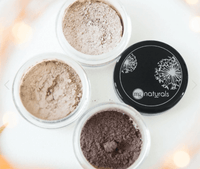
  • • Use loose mineral powders regularly
  • • Are buying for children or teens
  • • Have a compromised skin barrier
  • • Have respiratory sensitivities, asthma, or allergies
  • • Have outgrown blind trust in "industry standard"
  • • Already avoid parabens, synthetic fragrance, or known endocrine disruptors and want to apply the same logic consistently

PEER-REVIEWED EVIDENCE

Possibly carcinogenic to humans — by inhalation

The International Agency for Research on Cancer (IARC), part of the World Health Organization, classifies titanium dioxide as Group 2B: possibly carcinogenic to humans — based on rat inhalation studies showing lung tumour development. If you only ever used liquid foundation, this would be largely theoretical. If you use loose mineral powders, pressed powders, dry shampoo, or any product that creates dust during application, you are inhaling these particles every time you tap, swirl or buff.

Citation:
IARC Monograph Volume 93 (2010). Carbon Black, Titanium Dioxide, and Talc.

0K1A2472.jpg__PID:e5f18948-d89a-44ea-a2b5-eda61beef334

You probably don't need to worry if you:

  • • Wear makeup occasionally
  • • Have skin that tolerates almost anything
  • • Are comfortable trusting current regulatory thresholds
  • • Aren't bothered by ingredient philosophy in your shopping

We're not here to drag anyone into a panic. We're here for the women who already know something hasn't been sitting right.

49A64EC1-731B-4160-8660-214730EE16B3.jpg__PID:d25fe5f1-8948-489a-94ea-a2b5eda61bee

PEER-REVIEWED EVIDENCE

Powders aren't liquids — and bodies know the difference

A puff, a swirl, a brush tap — every powder application aerosolises small TiO₂ particles into the breathing zone right under your nose. Animal studies behind the IARC 2B classification show inhaled TiO₂ deposits in the lungs, driving inflammation and, at sufficient doses, tumour formation. Cosmetic powder use isn't industrial occupational exposure. But it is daily, close-range inhalation of a substance the WHO classifies as possibly carcinogenic by exactly that route. For people with asthma, allergies, or respiratory sensitivity, this is not minor.

Source:
Shi et al. (2013). Titanium dioxide nanoparticles: a review of current toxicological data. Particle and Fibre Toxicology, 10, 15

Powder, cream, or gloss — it's not all the same

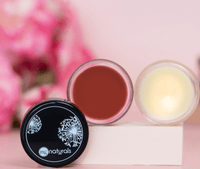
A daily-use loose powder is the highest-exposure scenario. A liquid worn weekly is lower. A lipstick you apply and re-apply (and eat) sits somewhere uncomfortable in between. Application format matters. Frequency matters. Real life matters.

Brands that lump every product into one "it's fine" reassurance are not having an honest conversation.

Our stance

If you've been dismissed by mainstream beauty, frustrated by "clean" brands that still don't feel right, or tired of being told your skin is "just difficult" — yes, this matters.

MG Naturals exists for you.
Frequently asked questions

Should children avoid titanium dioxide?

There is no formal pediatric warning, but children's skin barriers are thinner, their bodies smaller, and their cumulative lifetime exposure starts younger. Titanium dioxide turns up in children's toothpaste, sunscreen, lollies and white-iced treats. Many parents we talk to choose to limit it on first principles — particularly for products applied or used daily.

Are powder products worse than liquids?

In terms of inhalation risk — yes. Loose powders aerosolise on application. Pressed powders less so. Liquids, creams and balms don't aerosolise at all. The IARC 2B classification is specifically tied to inhalation exposure, which is why powder format matters.

Does occasional use really matter?

Occasional use is much lower-risk than daily lifetime use. The cumulative-exposure case is strongest for products applied to the face every day, year after year — foundation, powder, sunscreen, BB cream — where small effects (if any) compound over decades.

What if I have eczema or rosacea?

Compromised skin barriers absorb ingredients differently to intact skin. The "doesn't penetrate healthy skin" reassurance loses its weight when your skin isn't intact. People with eczema, rosacea, perioral dermatitis or post-procedure skin have a stronger reason to choose titanium dioxide-free formulations.

What about sunscreen — should I stop using mineral SPF?

No. Skin cancer is not a hypothetical risk and sun protection is essential. The choice is between titanium dioxide-based mineral sunscreen and zinc oxide-based mineral sunscreen — both are effective UV filters, but zinc oxide has a stronger safety profile and is generally preferred by clean beauty brands. Don't stop wearing sunscreen; consider switching the type.

Where is MG Naturals based, and does that matter?

MG Naturals is an Australian-owned, family-run brand. Australian regulators (FSANZ, TGA) currently permit titanium dioxide in food and cosmetics, but we follow the EU precautionary standard in our formulations because we think it's the right call for our customers.