Your Cart is Empty




By Kailah, Founder of MG Naturals · Cosmetic formulator since 2014 · Last updated: September 2026
Choosing foundation can feel unusually complicated when your skin is sensitive, reactive or prone to breakouts. You are not only looking for the right shade and finish. You also need a formula that fits comfortably into your existing routine and does not introduce unnecessary variables.
The short answer: choose foundation by reading the complete ingredient list, considering any sensitivities you already know about, selecting a texture and coverage level that suits your skin, and testing the formula gradually before wearing it across your entire face. For acne-prone skin, look for products described as non-comedogenic or unlikely to clog pores, while remembering that no label can guarantee how your individual skin will respond.
Foundation is a cosmetic, not an acne treatment or a solution for an underlying skin condition. If you experience persistent burning, swelling, itching, hives or worsening breakouts, stop using the product and seek advice from a qualified healthcare professional.

Sensitive, reactive and acne-prone skin can overlap, but they do not describe exactly the same concern. Understanding what your skin tends to do can help you evaluate foundation more carefully.
“Sensitive skin” is a broad description rather than a single diagnosis. People commonly use it when products cause stinging, discomfort, dryness, itching or visible redness. The reaction may be related to irritation, an allergy, an existing skin condition or a combination of factors.[1]
“Reactive skin” is an informal term often used when skin visibly changes or feels uncomfortable in response to factors such as heat, weather, friction, skincare or makeup. Because the cause is not always obvious, changing several products at once can make the trigger harder to identify.
Acne develops when hair follicles become blocked by oil and dead skin cells, with inflammation and other biological factors also contributing.[2] Acne-prone skin may be oily, dry, sensitive or a combination of these. It should not automatically be treated as skin that needs harsh, drying products.
These categories are not mutually exclusive. Someone using an acne treatment, for example, may also experience dryness or irritation that changes how foundation sits on the skin.
Read the complete ingredient list rather than relying only on phrases such as “clean”, “natural”, “hypoallergenic” or “for sensitive skin”. These descriptions do not tell you whether a particular ingredient is suitable for your personal sensitivities.
Start by asking three practical questions:
The United States Food and Drug Administration notes that cosmetic allergies can occur at any age and identifies fragrances, preservatives, dyes and metals among the major categories of cosmetic allergens.[3] This does not mean every ingredient in these categories is unsuitable for everyone. It means personal reaction history and transparent labelling matter.
For a more detailed explanation, read the MG Naturals guide to reading a foundation ingredient list.
Yes. Some fragrance ingredients can trigger irritation or allergic contact dermatitis in susceptible people.[4] If you know that fragrance is a trigger for you, a fragrance-free foundation may be a practical starting point.
Check the ingredient list for terms such as “fragrance” or “parfum”, but do not assume that “unscented” always means fragrance-free. According to the FDA, an unscented product may still contain fragrance ingredients used to mask the smell of other ingredients.[4]
Plant-derived ingredients and essential oils should also be evaluated individually. “Natural” does not automatically mean non-irritating, just as “synthetic” does not automatically mean harmful. What matters is the ingredient, its concentration, the finished formula and your own skin history.
No. Preservatives are not automatically a problem. They are used in suitable cosmetic formulas to help prevent microorganisms from growing in the product.[5] However, certain preservatives can cause allergic contact dermatitis in susceptible people.[3]
If you have been medically diagnosed with a preservative allergy, compare the ingredient list with the specific ingredient name provided by your dermatologist or allergy specialist. Avoid excluding broad ingredient categories without knowing the actual trigger.
If reactions continue and you cannot identify the cause, a qualified healthcare professional may recommend formal patch testing to help distinguish an allergy from other forms of irritation.
“Non-comedogenic” generally means a product is intended to be less likely to clog pores. It can be a useful screening term for acne-prone skin, but it is not a guarantee that a foundation will suit every person or prevent breakouts.
The American Academy of Dermatology recommends looking for products labelled “non-comedogenic” or “won’t clog pores” when caring for acne-prone skin. It also recommends gentle cleansing and avoiding abrasive scrubbing, which can irritate the skin.[6]
When evaluating a new foundation, consider your complete routine rather than blaming one ingredient immediately. Breakouts or discomfort can also coincide with:
Foundation does not treat acne. Persistent, painful or scarring acne should be assessed by a qualified healthcare professional.
Neither liquid nor mineral foundation is universally better for sensitive skin. The better choice is the formula, texture and application method that feel most comfortable on your skin and provide the coverage you want.
A BB cream may suit someone who wants a sheer, flexible base that evens the appearance of the complexion without fully covering freckles or natural skin texture.
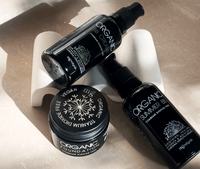
The MG Naturals Organic BB Cream provides lightweight, buildable coverage with a luminous finish. Its current ingredient list is available on the product page for review before purchase.
A liquid foundation may be appropriate when you want more visible evening of the complexion while retaining control over placement. Rather than covering the entire face heavily, begin with a thin layer and add more only where needed.
The MG Naturals Organic Liquid Foundation is the more coverage-focused option within the MG Naturals complexion range.
A mineral powder can be used on its own or applied lightly over a liquid base. The result depends on the formula, the condition of the skin, the brush and the amount used. Applying too much powder over dry or heavily layered skincare can make texture more noticeable.
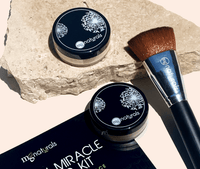
The MG Naturals Mineral Foundation Powder provides buildable powder coverage and can be applied selectively rather than heavily across the entire face.
No foundation format is automatically suitable for everyone with sensitive or acne-prone skin. Review each product’s current ingredient list and assess the finished formula on your own skin.
Use only as much coverage as you need. A thin, targeted application reduces the number of layers sitting on the skin and makes it easier to assess how the formula is performing.
A practical application method is:
Coverage preference is personal. The aim is not to hide every sign of real skin, but to find a level of coverage that feels comfortable and looks balanced.
Prepare the skin with a simple routine that you already know it tolerates. Foundation is easier to evaluate when it is not being introduced alongside a new cleanser, serum, moisturiser and primer.
Before applying foundation:
The MG Naturals guide to preparing skin before makeup explains how the base underneath foundation can influence its finish and wear.

Introduce a new foundation slowly and test it on a small area before wearing it across your whole face. Testing cannot guarantee that a future reaction will not occur, but it may help identify an obvious problem before broader use.
The American Academy of Dermatology recommends applying a new skincare product to a small test area twice daily for seven to ten days, using the usual amount and leaving it on for the normal length of time. Its guidance also applies to cosmetics.[7]
A cautious foundation trial can follow this sequence:
If the product causes redness, itching or swelling during a small-area test, wash it off gently and stop using it. A home use test is not the same as medical patch testing and cannot identify the specific ingredient responsible for a reaction.
The MG Naturals Discovery Samples Kit provides foundation and BB cream samples so you can assess texture, finish and shade at home before selecting a full-size product.
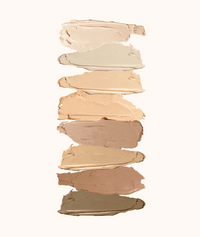
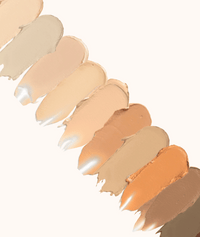
Choose your shade when your skin is relatively calm and assess it in indirect natural daylight. Temporary flushing can make the complexion appear redder than its usual baseline and may lead to a shade that looks too pink after the flushing settles.
Test more than one nearby shade along the jaw or side of the face, then wait before deciding. Check the result in daylight and look at how it blends with the neck and upper chest rather than judging a fresh, unblended swatch.
For more specific guidance, read Foundation Shade Matching for Sensitive Skin: A Different Set of Rules.
MG Naturals approaches complexion products through ingredient transparency and deliberate formulation choices. The MG Naturals complexion products discussed in this article are vegan and formulated without titanium dioxide. Their current ingredient lists are available on their respective product pages.
In the United States, titanium dioxide is permitted as a colour additive in cosmetics under specified conditions.[8] It is not essential to creating complexion makeup, and MG Naturals has chosen to formulate its makeup without it. Readers who want to understand this decision can explore the evidence, context and founder commentary in the MG Naturals Titanium Dioxide Library.
Being titanium-dioxide-free does not mean that a product cannot cause an individual reaction, and it does not replace checking the complete ingredient list. Any cosmetic ingredient—whether natural, mineral-derived or synthetic—should be considered in the context of the finished formula and the person using it.
Before purchasing a new foundation for sensitive, reactive or acne-prone skin, check the following:
There is no universally best foundation for sensitive skin. Look for a transparent ingredient list, avoid ingredients that have previously caused you a reaction, choose a comfortable texture and test the formula gradually before full-face use.
Not everyone reacts to fragrance, but fragrance ingredients can cause irritation or allergic reactions in susceptible people.[4] If fragrance has triggered symptoms before, choose a fragrance-free product and check the complete ingredient list.
Some cosmetics may contribute to pore congestion or irritation for some people, but acne has multiple causes. Look for non-comedogenic products, remove makeup gently each day and introduce new formulas one at a time.[6] Persistent, painful or scarring acne should be discussed with a qualified healthcare professional.
You can test a cosmetic on a small area before broader use by following dermatologist guidance.[7] This may reveal an obvious reaction, but it is not the same as clinical patch testing and cannot diagnose a specific allergy.
No. Mineral foundation is a format, not a guarantee of compatibility. The complete formula, application amount, skin preparation and your individual sensitivities are more important than the word “mineral” alone.
This article provides general cosmetic and educational information. It does not diagnose skin conditions or replace individual medical advice.