Your Cart is Empty




By Kailah, Founder of MG Naturals · Cosmetic formulator since 2014 · Last updated: May 2026
Knowing your undertone is the single most important factor in choosing foundation that actually disappears into your skin instead of sitting on top like a mask.
Most people get this wrong — not because they're bad at it, but because the standard advice
("check your veins") only tells half the story. Here's the complete, formulator-tested method for finding your true undertone, with five tests you can do in five minutes.
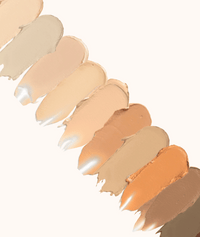
Skin tone has two dimensions:
• Depth is how light or dark your skin is on a vertical scale (very fair → very deep).
• Undertone is the hue beneath your skin's surface, regardless of depth.
Two people with identical depth can have completely different undertones. That's why "Light 04" in one brand can look totally different on you than the same depth in another brand — the undertone is mismatched.
Undertone is what makes foundation look natural or fake. Depth is just the volume control.
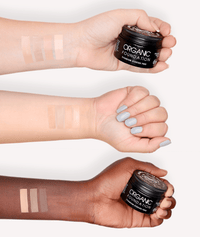
Cool. Pinkish, reddish, or bluish hues. Common in fair Northern European skin types. Cool
foundation will read "yellow" if mismatched warm.
Warm. Yellow, peachy, or golden hues. Common across Mediterranean, South Asian, Middle Eastern, and warm African skin tones. Warm foundation will read "pink" or "ashy" if mismatched cool.
Neutral. A balance of cool and warm. Genuinely flexible — works with most foundation
undertones, though specifically neutral foundations exist.
Olive. Subtle green or grey-green undertones. Often misidentified. People with olive undertones look orange in warm foundations and grey in cool ones. They need slightly green-balanced shades, which most brands don't make. We make ours specifically because so many customers needed them.

The classic test, but it only works in good lighting. In natural daylight (near a window, no artificial light), look at the inside of your wrist. What colour are the veins?
• Blue or purple veins → cool undertone • Green or olive veins → warm undertone
• A mix of both → neutral undertone
• Greenish-grey veins on slightly tanned skin → possibly olive
Why this works: cool undertones have more pink/blue blood vessel visibility, while warm undertones cause veins to read more greenish through the skin.
 Hold a piece of silver jewellery against your skin. Then a piece of gold. Step into natural daylight. Which one looks better against you?
• Silver looks better → cool undertone
• Gold looks better → warm undertone
• Both look equally good → neutral
• Neither looks particularly flattering, both look slightly off → possibly olive

Hold a piece of pure white paper against your bare face in natural light. Look at how your skin looks against the paper.
• Skin looks pink, rosy, or slightly bluish → cool
• Skin looks yellow, peachy, or golden → warm
• Skin looks roughly the same as the paper → neutral
• Skin looks slightly green or sallow → olive

Think about how your skin reacts to sun exposure (without sunscreen, briefly):
• Burns easily, never tans → cool
• Burns first, then tans → likely cool or neutral
• Tans easily, rarely burns → warm or olive
• Always tans deeply → warm
Why this works: undertone correlates strongly with melanin behaviour. The way your skin handles UV is a window into its underlying chemistry.

Think about which colours people compliment you in:
• Jewel tones (sapphire, ruby, emerald, magenta) → cool
• Earth tones (mustard, olive, terracotta, rust) → warm
• Both work → neutral
• Muted, dusty colours (sage, dusty rose, smoky lavender) → olive
Here's why so many people get this wrong: artificial lighting destroys your ability to read
undertone accurately. Bathroom lights, fluorescent office lights, and warm bulbs all distort the colour information your eye is processing. Always do these tests in natural daylight.
If you've done the tests and you're still genuinely unsure (which is normal — undertones are subtle), our Shade Finder Quiz takes the guesswork out. The quiz uses your answers to triangulate your undertone with much higher accuracy than any single test.
Plus, with our Perfect Match Guarantee, even if the quiz isn't right the first time, we swap your foundation free.
Read more
How to find your foundation shade online
Foundation Shade Matching for Sensitive Skin: A Different Set of Rules