Your Cart is Empty




By Kailah, Founder of MG Naturals · Cosmetic formulator since 2014 · Last updated: September 2026
If foundation repeatedly leaves your skin itching, stinging, red or uncomfortable, it may be irritating your skin or triggering an allergic reaction. However, foundation is not always the cause—skincare, sunscreen, cleansers and other products in your routine may also contribute.
Pay attention to when the discomfort begins, where it appears and whether it returns when you use the same product.
At MG Naturals, we believe makeup should not be judged only by how it looks immediately after application. We also care about understanding what goes into the formulas we repeatedly apply to our skin.
That philosophy has shaped our approach to formulating MG Naturals makeup, including our decision to formulate without titanium dioxide, our commitment to vegan makeup and our considered approach to the ingredients we use.
If your foundation seems to disagree with your skin, here are some useful things to check.

There can be several possible explanations when your skin reacts after wearing foundation.
Contact dermatitis can result from direct irritation or an allergic reaction. Irritant contact dermatitis occurs when a substance irritates or damages the skin’s protective outer layer, while allergic contact dermatitis involves an immune response to an allergen.[1]
Possible signs of a cosmetic reaction include itching, redness, a rash, flaking, burning or swelling. The US Food and Drug Administration identifies fragrances and preservatives among the common classes of allergens found in some cosmetic products.[2]
A product working beautifully for someone else does not guarantee that it will suit your skin.
Skin responses are individual. That is one reason we encourage ingredient awareness rather than simply following whichever foundation happens to be trending.

Pay attention to how your skin feels as well as how your makeup looks. Signs worth investigating may include:
These symptoms do not automatically mean your foundation is responsible. Your skincare, sunscreen, cleanser, environmental exposure or another product in your routine could also be contributing.
If symptoms repeatedly appear after using a particular cosmetic, stop using it and consider speaking with a qualified healthcare professional. Seek immediate medical attention if you experience symptoms of a severe allergic reaction, such as difficulty breathing, trouble swallowing or facial swelling.[2]
Beautiful makeup should not require you to ignore what your skin is telling you.

Turn your foundation around and read the complete ingredient list.
If you know your skin is sensitive to fragrance, this is one of the first ingredient categories worth checking. A fragrance may be made from multiple ingredients, and certain fragrance ingredients can cause allergic contact dermatitis in people who have become sensitised to them.[2][3]
Something can smell luxurious and still not be what your skin wants. This is why reading the ingredient list matters more than relying solely on attractive words printed on the front of the bottle.
Preservative systems serve an important purpose in many cosmetic formulas by helping to control the growth of potentially harmful microorganisms.[4]
However, certain preservatives are also recognised cosmetic allergens for some people.[2]
Sensitive skin is personal.
The useful habit is learning what is in your makeup and, if you experience recurring reactions, investigating whether a particular ingredient or combination of products may be involved.
At MG Naturals, our philosophy is that what we choose to leave out can be just as important as what we put in.
Titanium dioxide is a colour additive permitted for use in cosmetics, including cosmetics intended for use around the eyes.[5] It is used in many complexion products, including foundations and powders.
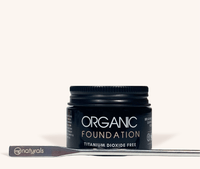
MG Naturals chooses to formulate its makeup without titanium dioxide.
This is a considered MG Naturals formulation choice. It should not be interpreted as evidence that titanium dioxide caused a particular person’s skin reaction.
Our decision to formulate without titanium dioxide has helped shape the way we approach complexion products and ingredient selection.
Because titanium dioxide is a complex subject, we do not expect customers to simply take our word for it. You can explore the research, regulatory information and reasoning behind our position in the MG Naturals Titanium Dioxide Library.
Something being natural or plant-derived does not automatically mean that nobody can react to it. Natural extracts and essential oils can contain fragrance allergens or other substances capable of causing skin sensitisation in susceptible individuals.[2][3]
That is why we want the conversation to go beyond the assumption that natural always means good and synthetic always means bad.
Ingredient-conscious makeup should be more thoughtful than that. It should involve understanding formulations, knowing your own skin and making informed choices.
If your skin is sensitive, reactive or unpredictable, start by becoming a careful label reader.
Before buying or introducing your next foundation:
The FDA recommends carefully reading cosmetic ingredient panels and avoiding ingredients you know or believe you may be allergic to. It also notes that terms such as “hypoallergenic,” “fragrance-free” and “for sensitive skin” do not have a federal standard or definition in the United States.[2]
Above all, pay attention to how your skin responds.

At MG Naturals, we take a considered approach to cosmetic formulation and the ingredients we choose to use. Our titanium dioxide-free and vegan commitments are part of that philosophy.
We do not believe every natural ingredient is automatically suitable for everyone or every synthetic ingredient is automatically harmful. We believe customers deserve clear information, thoughtful formulas and the freedom to make informed choices for their own skin.
How to Read a Foundation Label: A Complete Guide
Foundation Shade Matching for Sensitive Skin: A Different Set of Rules
Is Titanium Dioxide Safe in Makeup? A Formulator’s Honest Answer