FREE SHIPPINGAustralia $70+ International $180+

0

Your Cart is Empty

Why is the beauty industry so reliant on titanium dioxide?

By Kailah Shannon — Founder of MG Naturals. Cosmetic Formulator since 2014.

Last updated: 5 May 2026

QUICK ANSWER

The beauty industry uses titanium dioxide because it is cheap, effective, and shortcuts the hardest part of formulation. It delivers instant opacity, fakes a "perfected skin" finish, and bypasses the years of pigment work it would take to get the same result with safer ingredients. It accounts for roughly 70% of all global pigment production. It is in your foundation for the manufacturer's benefit — not yours.

image.png__PID:d8074401-772b-4f13-9603-2030a36322a0

It's not a mystery. Titanium dioxide is everywhere because it solves problems brands don't want to solve properly.

It's the laziest path to coverage

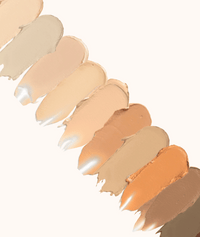
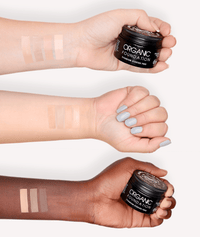
Real pigment work is hard. Balancing undertones, depth, saturation and finish across a shade range takes years of formulation skill. Titanium dioxide bypasses all of it. Drop it in, get instant opacity, ship the product.

1D97B5D2-C44E-47DD-B811-971938CC905F.png__PID:7a9e8b58-c947-4cdc-8084-19c321284731
7569BA7D-3E69-4BAD-BCCE-9C87C637C182.png__PID:72178713-e1ca-40c1-addd-9b49e1738fee

It fakes "perfected" skin

Modern beauty has trained people to expect a blank-canvas, airbrushed finish on first application. Titanium dioxide is what creates that look. Without it, brands would have to either reformulate properly, or admit their products don't deliver the visual hit customers have been conditioned to expect.

Most brands aren't willing to do either.

PEER-REVIEWED EVIDENCE

Convenience, not safety, is why it's there

Titanium dioxide accounts for roughly 70% of all pigment production globally — across paints, plastics, paper, food and pharmaceuticals. It's in your foundation because it's the cheapest, fastest way to create whiteness, opacity, and high coverage. You are paying premium prices for an ingredient chosen for the manufacturer's benefit, not yours.

Source:
Skocaj et al. (2011). Titanium dioxide in our everyday life; is it safe? Radiology and Oncology, 45(4), 227–247.

It's cheap

Titanium dioxide is one of the most cost-effective pigments on the market. Replacing it means using more expensive pigments, in more sophisticated combinations, with more testing. That eats margin. So brands keep it.

image (3).png__PID:58c9472c-dc40-4419-8321-284731126e2b
image (9).png__PID:8713e1ca-a0c1-4ddd-9b49-e1738fee8a9c

It's "approved" — so the conversation ends

"Approved" is not the same as "safe." It's the same as "nobody has been forced to remove it, yet." Most ingredient bans in cosmetic history happened decades after the science was clear — phthalates, certain parabens, microbeads, oxybenzone in coral-sensitive regions. The pattern is reliable. The science usually leads. Regulation eventually catches up.

The bigger point

Titanium dioxide is the ingredient that lets the beauty industry keep cutting corners while looking polished. Take it out, and you have to actually be good at formulation.

We took it out.

image (6).png__PID:472cdc40-8419-4321-a847-31126e2b0f8a

Frequently asked questions

Why don't more brands remove titanium dioxide?

Cost and complexity. Removing TiO₂ means redesigning entire shade ranges, sourcing more expensive iron oxides and mineral pigments, and accepting that finished products won't deliver the instant blank-canvas finish customers have been conditioned to expect. Most brands won't take that hit.

Is titanium dioxide cheaper than the alternatives?

Yes — significantly. It's one of the lowest-cost-per-gram functional pigments available. High-quality iron oxides, ethically sourced micas, and properly balanced mineral pigment systems can cost several times more, before factoring in additional R&D and stability testing.

Is titanium dioxide natural?

No. Many brands marketed as "clean," "natural," or "non-toxic" still use titanium dioxide — often "non-nano" — and rely on the "non-nano" label to close the conversation. Always check the full ingredient list.

Do "clean" beauty brands always avoid titanium dioxide?

Regulatory approval reflects current legal status, not absolute safety. Substances like trans fats, leaded petrol, asbestos and certain phthalates were all "approved" for decades before being restricted. Approval is a given, not a verdict.

Are mineral makeup brands titanium dioxide-free by default?

No — quite the opposite. "Mineral makeup" is a marketing term, and titanium dioxide is itself a mineral. Most mineral foundations and powders are heavily titanium dioxide-based. "Mineral" tells you nothing about whether TiO₂ is or isn't in the formula.

Does removing titanium dioxide affect SPF claims?

Only if the product was relying on TiO₂ as its UV filter. In sunscreen, removing titanium dioxide means switching to zinc oxide as the primary mineral filter — which is fully legal and has a stronger safety record. In foundation and other complexion products, TiO₂ removal does not affect SPF unless the product was making active SPF claims based on it.